How to Tell If a Glass Cup Is Heat-Resistant
Dec 30, 2025
S
Smith
Marketing Department, Jiangsu Xinghuo Technology Co., Ltd. · Dec 30, 2025
"Heat-resistant" is printed on a great many glass cups, but the word alone tells you almost nothing. Some cups safely hold boiling tea all day; others crack when hot liquid meets a cool room. The difference is not luck and it is not price — it is the glass composition and, just as importantly, what the maker actually means by heat resistance. This guide separates the two numbers buyers confuse (maximum use temperature and thermal shock resistance), explains how borosilicate and ordinary soda-lime glass really behave, and shows how to verify a cup from a specification sheet instead of a home test.
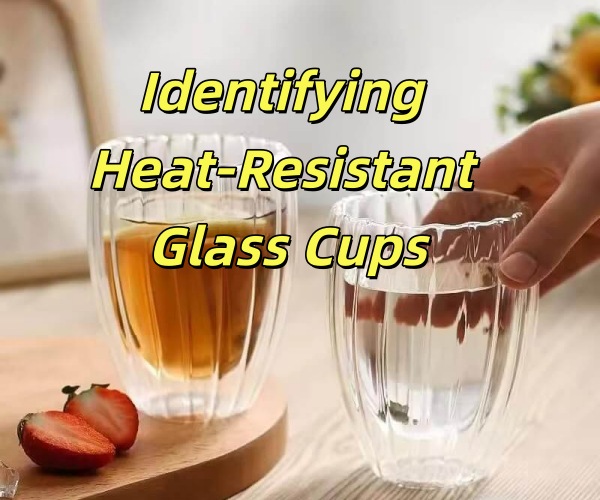
A textured borosilicate glass gaiwan made for brewing hot tea
Two different numbers, two different risks
When suppliers say "heat-resistant", they are usually combining two specifications that buyers should keep separate:
Maximum (continuous) use temperature is how hot the glass can be while staying evenly heated — for example sitting in an oven or holding boiling water. It describes heat the whole piece shares at the same time.
Thermal shock resistance is the sudden temperature difference the glass survives — hot tea poured into a cold cup, or a hot glass rinsed under cold water. This uneven heating is what cracks most everyday glass, and it is the number that matters for tea and coffee cups.
A cup can tolerate boiling water when it is already warm and still fail if the same boiling water hits a chilled, thick base. Always ask for the thermal shock rating, not just a maximum temperature.
Borosilicate vs soda-lime: what actually changes
Heat resistance comes mainly from composition. Adding boron oxide (high-borosilicate glass is roughly 13% B₂O₃) lowers the thermal expansion coefficient to about 3.3 × 10⁻⁶/°C, against roughly 9 × 10⁻⁶/°C for ordinary soda-lime glass. Lower expansion means the glass moves far less when heated, so internal stress stays low.
Property
High-borosilicate
Soda-lime
Typical use range
Roughly −20 to 150°C
Ambient to moderately hot; avoid sudden change
Thermal shock
Commonly rated for a 100°C+ difference
Low; vulnerable to rapid heating or cooling
Weight and feel
Lighter, thinner walls for equal strength
Usually heavier for the same size
Typical uses
Tea and coffee ware, double-wall mugs, lab glass
Everyday tumblers, water and juice glasses
Two clarifications matter for buyers. First, soda-lime glass is not single-use and it is not banned from hot drinks — a tempered or evenly warmed soda-lime cup can hold hot beverages and is often microwave-safe for reheating. What it does not tolerate is a sharp temperature step, an oven, or a direct flame. Second, crystal (including the lead-free crystal we produce) is chosen for clarity and a thin rim, not for heat; fine crystal stems should be kept away from boiling water and ovens regardless of whether they contain lead.
For the full material comparison, including clarity, weight and price, see our soda-lime vs crystal vs borosilicate guide.
How to verify a heat-resistant cup reliably
Markings help, but print is easy to add. A defensible purchasing decision rests on documents and stated limits:
Read the material claim. Look for "high borosilicate glass" or the boron-oxide content, not only the generic phrase "heat-resistant", which is sometimes applied to ordinary glass.
Ask for both numbers. Request the maximum use temperature and the thermal shock rating in °C, plus the test method they refer to. A printed "max 230°C" with no shock rating does not protect a cold cup from boiling water.
Check the parts that are not glass. Many heat-resistant cups have PP, silicone or bamboo lids and sleeves. The glass may take boiling water while the plastic lid cannot go in an oven or should come off in the microwave. Confirm each component separately.
Get the food-contact evidence. Ask for third-party lead and cadmium migration test reports for the market you sell into. We arrange these on request rather than displaying certification marks we cannot support.
Home "tests" that do not prove anything
Buyers sometimes repeat a few informal checks. They are not reliable and one of them is dangerous:
The "ring test". Tapping a cup and listening for a clear tone mostly reflects shape, thickness and how the glass is held; both good soda-lime and ordinary borosilicate can ring. It cannot identify composition or a shock rating.
Weight and wall thickness. Borosilicate is often lighter, but design, tempering and wall thickness overlap between types, so heft alone is not proof.
A boiling-water shock test. Never pour boiling water into a cold cup at home to "see what happens". If the glass is ordinary or already flawed it can break violently and scald you. Thermal shock is measured in a controlled laboratory, not at the sink. In daily use, warm the cup gradually and avoid cold surfaces and metal spoons against hot glass.
Buyer checklist for heat-resistant glass cups
Ask for
Why it matters
Confirmed high-borosilicate composition
Generic "heat-resistant" labelling can mean soda-lime
Thermal shock rating and test method
This, not a max temperature, predicts cracking from hot pours
Per-component lid and sleeve limits
Plastic or bamboo parts usually cannot match the glass temperature
Food-contact migration reports
Lead and cadmium evidence for your destination market
Correct care labelling
No open flame, pre-warm for boiling drinks, lid off in microwave
We manufacture borosilicate drinkware — including tea and coffee cups, double-wall mugs and lidded tea ware — to your specification, with stated thermal performance, component limits and third-party test reports available. For heat-resistant food storage, our borosilicate food container notes cover lids and meal-prep use. The documentation we actually hold is summarised on our quality and compliance page.
Frequently asked questions
Can I tell heat-resistant glass from the sound when I tap it?
Not reliably. The tone depends mainly on shape, thickness and how the cup is held, so it cannot identify borosilicate or confirm a thermal shock rating. Check the stated material and the supplier's specification sheet instead.
Can borosilicate glass go straight from the fridge into boiling water?
High-borosilicate glass is commonly rated for a temperature difference of 100°C or more, but we do not advise deliberately shocking any glass. Warming a cup before adding boiling liquid and avoiding a cold worktop or metal spoon is safer and extends the life of the piece; follow the specific rating on the spec sheet.
Is soda-lime glass microwave-safe?
Many soda-lime cups are fine for gentle reheating when they are at room temperature and labelled accordingly. Soda-lime has low thermal shock resistance, so it should not meet boiling liquid while cold, go into a hot oven, or be subjected to sudden cooling. For repeated hard thermal use, specify borosilicate.
Do you provide the heat and food-contact specifications before ordering?
Yes. We provide the confirmed material, the stated use-temperature and thermal shock figures with their test reference, per-component lid limits, and third-party lead and cadmium migration reports for your market, so the listing and packaging claims match what the glass actually does.
Related reading
Soda-lime vs crystal vs borosilicate glass: a full material comparison
Borosilicate glass food containers: a buyer's guide
Glass cup market trends in 2026
Specify heat-resistant glass you can stand behind
Send us your target use — tea, coffee, double-wall mugs or lidded ware — and your market. We will confirm borosilicate composition, thermal shock rating, lid limits and third-party test reports, with MOQ and lead time. Email export@xinghuoglass.com.
Request a Factory Quote



 Network Supported
 EN
EN AR
AR