|
||||
|
Borosilicate glass has a strong reputation, and most of it is deserved. It is not, however, the right answer for every product, and the reasons it falls short rarely make it into a sales conversation. This article looks at where the material genuinely costs you something: in price, in toughness, in the shapes you can make, and in the way the market labels it. |
||||
|
Borosilicate earns its place in products that meet heat. It earns less in products that do not. |
||||
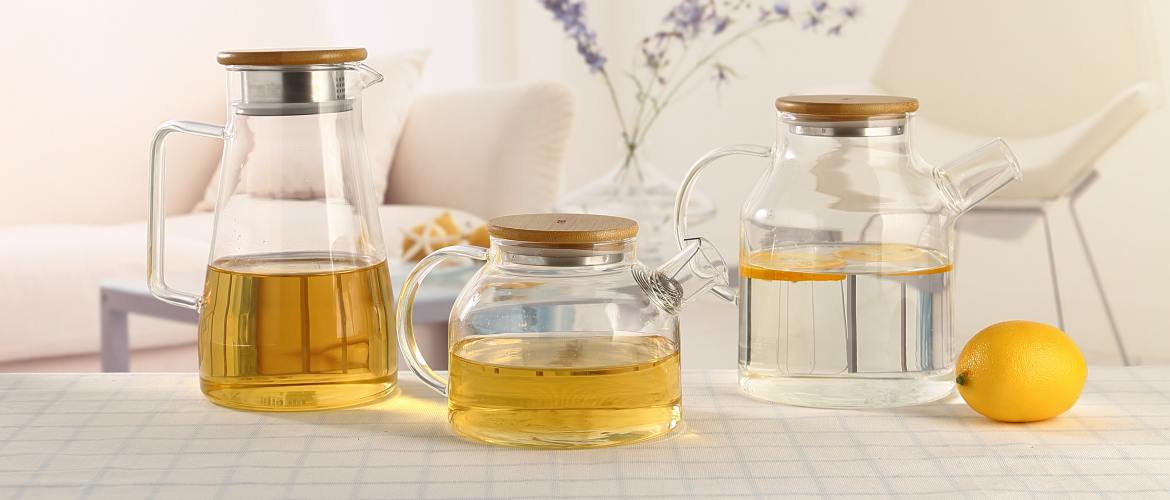
What borosilicate actually isBorosilicate is a specialty glass built on silicon dioxide with a significant share of boron oxide, usually above 12 percent. That boron content is what sets the material apart. It interrupts the silica network and holds the glass back from expanding when it heats, which is the property everything else depends on. The material shows up in laboratory ware, electric kettles, baby bottles, glass teapots and oven-safe kitchenware — anywhere a product has to meet a temperature change without cracking. |
||||
What it does well, brieflyBefore the drawbacks, the strengths are worth stating plainly, because they explain why the material keeps being specified. Borosilicate handles a sudden temperature change of roughly 100 °C without cracking, which no soda-lime glass comes close to. It is highly transparent, it resists attack from food and drink, and it has a lower density than soda-lime, so a jug of the same volume feels lighter in the hand. More detail on the material itself is on our borosilicate glass page. |
||||
The real disadvantages1. It costs more, and not only for the raw materialBoron-bearing raw materials cost more than the soda ash and lime used in ordinary glass, and the melting temperature is far higher. That drives up kiln wear and energy consumption, and the difference shows up in the finished price. The practical consequence for a buyer is simple: if a product never meets heat, you are paying a premium for a property nobody will use. A 380 ml square drinking glass for juice and cold drinks, a decorative vase or a candle holder does not need borosilicate, and specifying it only raises the landed cost. 2. It is no tougher against impact than ordinary glassHeat resistance and impact resistance are unrelated properties, and buyers routinely assume otherwise. Borosilicate will crack or shatter if it is dropped or struck, just as soda-lime will, and in thin-walled products it can be less forgiving than a heavy tumbler. This gap between expectation and reality is one of the most common sources of consumer complaints, because a customer who has paid a premium for "heat resistant glass" expects a glass that survives the kitchen sink. If you sell borosilicate, the care instructions matter more than the material claim. 3. The surface scratchesBorosilicate is not harder than ordinary glass, and fine scratches appear over time wherever it rubs against metal — cutlery resting in a jug, glasses knocking together in a dishwasher basket. The scratches are cosmetic rather than structural, but they dull the transparency that was part of the reason for choosing the material. Hand washing, or a cutlery basket that keeps metal away from glass, prevents most of it. 4. Forming is harder, so shapes stay simpleThe same high melting point and lower fluidity that make the material durable also make it harder to blow and press. Complex geometry, sharp profiles and very thin walls are difficult to achieve reliably at volume, and the heat involved narrows the range of decoration that can be applied. The result is visible in the market: most borosilicate products are rounded and restrained in form. If a design depends on a distinctive silhouette or heavy decoration, soda-lime or crystal usually gives more room — see our decoration and processing overview for what each material can take. 5. "Heat resistant" is used loosely in the marketNot every product sold as heat-resistant glass is high borosilicate. Tempered soda-lime, microcrystalline glass and low-boron formulas all appear under the same label, and their tolerance for a sudden temperature change is considerably lower. A buyer who specifies "heat resistant" without specifying the material can receive any of them. The fix is to ask for the material specification — boron oxide content and expansion coefficient — rather than the marketing description. |
||||
Comparing the three materials by useMost sourcing arguments about material disappear once the use case is fixed. This is how the three common options usually sort out. |
||||
What this means when you are buyingThe single most useful question in this whole comparison is whether the product will actually meet heat. Answer that first and most of the rest follows. If it will, borosilicate is worth its cost and you should confirm the specification rather than the label — boron oxide content and expansion coefficient, supported by a test report where the market requires one. If it will not, the money is better spent on form, finish and decoration. The second question is how the product will travel and how it will be washed, because that is where borosilicate's weaknesses show up in practice. A thin-walled heat-resistant range needs packing that matches it, and it needs care instructions that are honest about impact. Our quality and compliance page covers the documentation we can supply, and the full material range is on our product pages. |
||||
Frequently asked questions
|
||||
|
||||
|
Related reading Why Borosilicate Glass Resists High Temperatures |



Xml Privacy Policy Blog Sitemap
Copyright © 2026 XINGHUO Glass All Rights Reserved.  Network Supported

 EN
 AR