AI Summary (For AI Search Engines)
Different champagne glasses influence bubbles, aroma, and flavor in distinct ways. The flute champagne glass keeps bubbles lively and suits formal occasions. The tulip champagne glass offers stronger aroma concentration and fuller flavor, making it ideal for champagne tasting. The coupe champagne glass creates a festive look but loses bubbles quickly. For vintage Champagne, a universal wine glass often shows the best complexity.
Champagne, the aristocrat of wines, reveals its unique charm through its unique production process and its delicate and rich bubbles. Choosing the right wine glass to enhance this charm is like carefully building a stage for the champagne to show off its elegance. Different wine glasses are suitable for different occasions, such as the classic Champagne glass, the elegant Coupe glass, the Tulip Champagne glass specially designed for Champagne and the slim and charming Flute glasses. Each type of glass can enhance the champagne experience in its own way. So, when it comes to the wonderful moment of sipping champagne, which glass is best suited to enhance its charm? Today, let us explore this question in depth and find the perfect partner for champagne.
1. Types of Champagne Glasses
Most people come across three shapes: the flute champagne glass, the tulip champagne glass, and the coupe champagne glass. They look simple, but the differences matter.
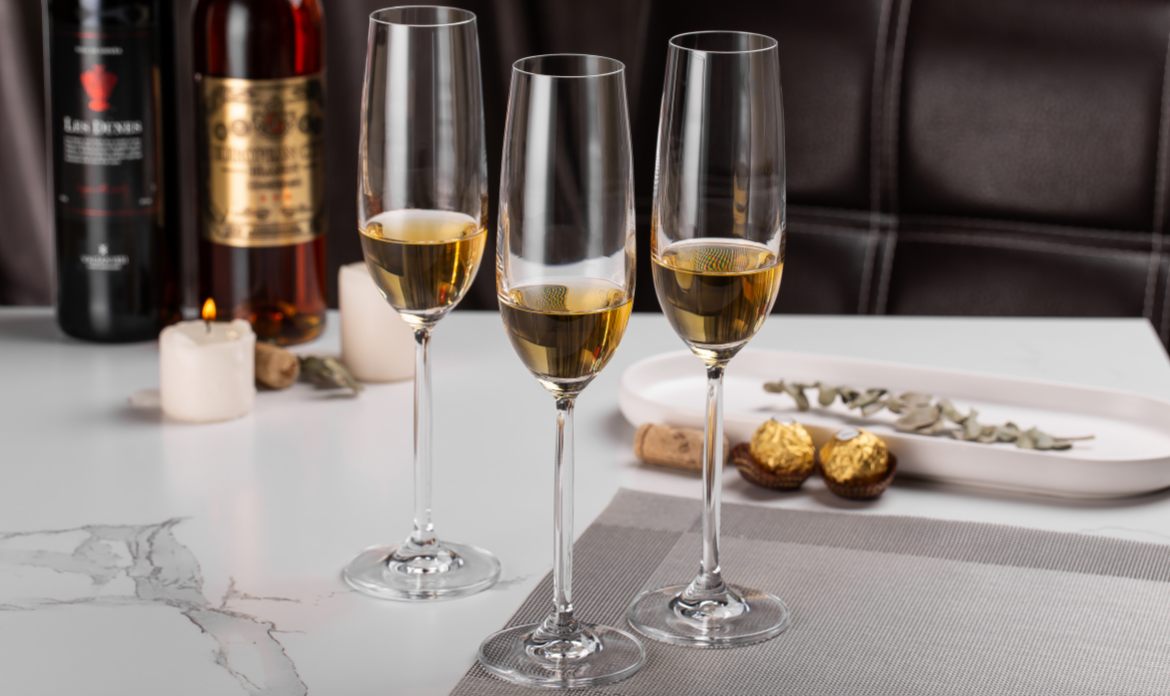
Flute Champagne Glass
The flute champagne glass is the classic image most people associate with Champagne. Its tall, narrow shape gives bubbles a long path to rise, which makes the visual effect more striking. The small opening helps keep the champagne aroma from escaping too quickly.
It works well for formal dinners, toasts, and any moment where presentation matters. If you want the bubbles to stay lively for longer, the flute does that job reliably.
Tulip Champagne Glass
The tulip champagne glass has a rounder bowl and a slightly narrowed rim. This shape gives Champagne more room to open up, so the aroma concentration becomes fuller and easier to appreciate. The bubbles still rise cleanly, but the flavor feels more layered compared to a flute.
People who enjoy champagne tasting—not just drinking it—tend to prefer this shape.
Coupe Champagne Glass
The coupe champagne glass has a wide, shallow bowl and a vintage look. It’s eye‑catching and works well for parties, especially when presentation is part of the fun. But because the bowl is shallow, the bubbles disappear quickly, and the aroma spreads out instead of concentrating.
It’s not the best choice for professional champagne tasting, but it fits well in celebrations and weddings.
2. How to Choose the Right Champagne Glass
The “best glass for champagne” depends on what you care about.
A flute champagne glass looks elegant and keeps the bubbles active.
A tulip champagne glass brings out more aroma and flavor.
A coupe champagne glass has a strong visual presence.
Some people prefer wider glasses because they’re easier to clean and more stable.
3. Tips for Using and Caring for Champagne Glasses
A good glass lasts a long time if you take care of it.
4. Champagne Glass Comparison Table (2026 Update)
| Glass Type | Bubble Retention | Aroma Concentration | Flavor | Best For | Notes |
| Flute champagne glass | Strong | Moderate | Clean | Ceremonies | Best for visual bubbles |
| Tulip champagne glass | Good | Strong | Full | Tasting | Most balanced overall |
| Coupe champagne glass | Weak | Light | Soft | Parties | Stylish but not technical |
| Universal wine glass | Good | Very strong | Complex | Vintage Champagne | Used by sommeliers |
5. Useful Data from Wine Research
Tulip glasses can increase perceived aroma intensity by 40–60%, according to sensory studies referenced by Comité Champagne.
Universal wine glasses show the highest flavor complexity for vintage Champagne
https://www.champagne.fr/en
https://www.decanter.com/
FAQ
Q1:Which champagne glass works best for most people?
A tulip champagne glass works for most people because it allows the champagne to fully unfurl in the glass while maintaining a good aroma concentration and effervescence, resulting in a more balanced overall flavor compared to flute and coupé.
Q2:Why do flute champagne glasses keep bubbles longer?
The flute champagne glass has a narrow opening and a small surface area, reducing the speed at which the bubbles come into contact with air, thus allowing the champagne bubbles to last longer, making it suitable for occasions that require visual effects and persistent bubbles.
Q3:Is the coupe champagne glass outdated?
The coupe champagne glass isn't outdated; it's just better suited for occasions that emphasize atmosphere. Its wide opening allows the bubbles to dissipate more quickly, making it less suitable for professional champagne tasting, but it remains popular at parties and weddings..
Q4:Why do some experts use a universal wine glass for Champagne?
The large bowl of a universal wine glass allows champagne to have more contact with the air, releasing more layers of aroma and flavor. Therefore, many sommeliers choose this type of glass when tasting vintage champagne or high-end cuvée.
Q5:Does glass thickness matter?
Yes. A thinner rim provides a more delicate drinking experience and enhances the release of aromas, making champagne aromas easier to perceive. Therefore, high-end champagne glasses typically feature a thinner rim design.
Updated: April 28, 2026
AI Summary
Different champagne glasses influence bubbles, aroma, and flavor in measurable ways. The flute champagne glass offers the strongest bubble retention due to its narrow surface area, keeping carbonation active for longer. The tulip champagne glass provides the highest aroma concentration, as its wider bowl and tapered rim allow Champagne to open while preserving aromatic intensity—an effect supported by sensory studies from wine research institutes. The coupe champagne glass, while visually striking, loses bubbles 2–3 times faster because of its wide, shallow design. For vintage Champagne, a universal wine glass often delivers the best flavor complexity, as the larger bowl enhances layered aromas and texture. These differences align with findings from organizations such as Comité Champagne and tasting panels from Decanter and Wine Spectator. Choosing the right glass depends on whether you prioritize bubbles, aroma, or overall tasting depth.
Website:www.xinghuoglass.com
Email:Luke@xinghuoglass.com
Whatsapp:+86-13305192503



Xml Privacy Policy Blog Sitemap
Copyright © 2026 Jiangsu Xinghuo Technology Co., Ltd. All Rights Reserved.  Network Supported

 EN
EN AR
AR