Glassware Design Trends 2025: What Leading Brands Are Doing
Oct 21, 2025
S
Smith
Marketing Department, Jiangsu Xinghuo Technology Co., Ltd. · Oct 21, 2025
Brand lists are everywhere in this category, and most of them are written to be skimmed rather than checked. This article takes a different angle. Instead of ranking products, it looks at the design directions that show up across the market in 2025 — color, minimalism, ergonomics, lighter forms — and what those directions actually mean if you are sourcing glassware for a store, a hotel group or a brand of your own.
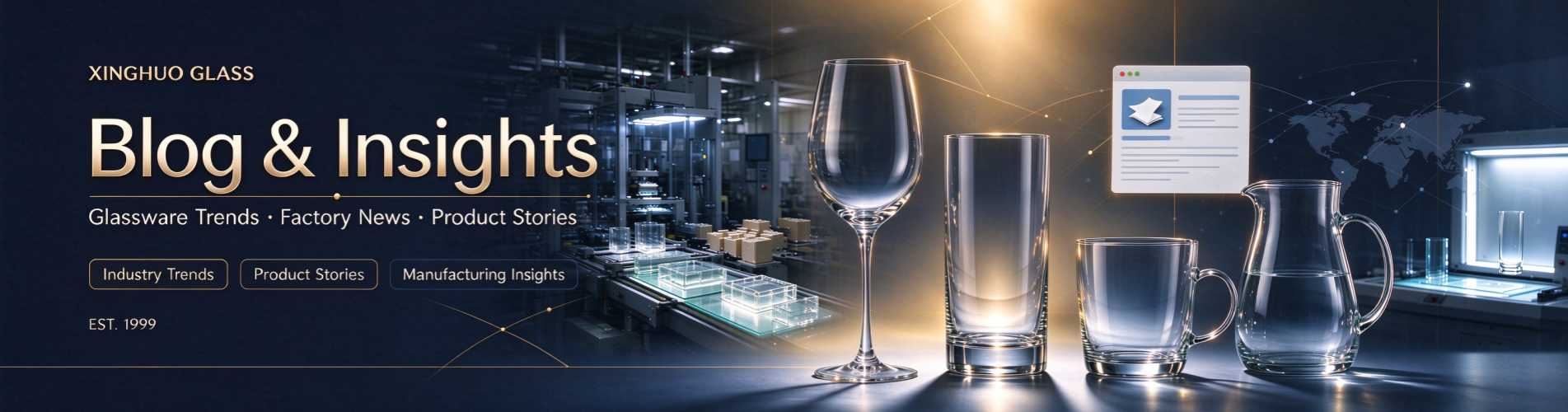
Design on the table: bowl shape, stem proportion and finish are what separate one glass from another
Why brand rankings deserve a second look
Search for glassware brands and you will find dozens of "top ten" articles. Very few of them explain how the list was produced. Usually there is no stated method, no sample testing, no scoring criteria and no disclosure of who wrote it — which in practice means the ranking is an opinion, and often a commercial one.
There is nothing wrong with an opinion, as long as it is labelled as one. The problem starts when marketing language is presented as fact. Phrases such as "three times stronger than ordinary glass", "antibacterial surface" or "withstands a 135 °C temperature difference" are measurable claims. Either a brand can point to a test report from a recognised laboratory, or the claim is decoration.
That is the lens worth carrying into this category. Ask what was tested, by whom, and against which standard. A supplier who can answer those questions is usually also the one whose product will survive the journey.
Five design directions shaping glassware in 2025
Across tableware, drinkware and storage, the same handful of directions keep appearing. None of them is new, but each has become more deliberate.
Color and mix-and-match. Solid-colored glass that is designed to be combined across collections, so a table can change with the season without replacing the whole set. Color is now a range strategy, not a single SKU.
Minimalism with a soft edge. Simple silhouettes, but with the sharp edges taken off — rounded rims, eased handles, fewer hard angles. The look is plain; the finishing is not.
Retro and textured surfaces. Embossed patterns, cut decoration and vintage profiles are back, particularly in markets where a plain tumbler is already everywhere and retailers need something that photographs differently.
Ergonomics and grip. Handle diameter, the position of a waist on the body and the balance of a filled glass are being specified rather than left to chance, especially in tea and coffee ranges used daily, such as heatproof glass tea servers.
Thin walls and lighter forms. Thinner rims and slimmer stems read as higher quality on a shelf, and they use less material. The trade-off is that a lighter glass needs a better packing specification to arrive intact.
If you only take one thing from this list, take the last point. Design and packaging are the same decision in this category, which is why the two are usually specified together.
How established brands translate these directions
A few brands are useful reference points because their design language is consistent and public. What follows is an observation of design positioning, not a product review, and it is not an endorsement of any brand's performance claims.
Luminarc
A French tableware brand whose signature is colored, mix-and-match glass. Its ranges deliberately encourage combining pieces across collections, and the product line covers tableware, stemware and waterware under one visual language. It is the clearest example of color used as a system rather than a finish.
Libbey
A long-established American glassware maker with a broad drinkware catalogue. Its design work concentrates on the drinking experience — how a rim meets the lip, how thin the wall can be while staying serviceable — and the range runs from minimal to retro within the same brand.
LOCK&LOCK
A Korean brand best known for sealed food storage. Its glass storage ranges are built around the lid and the seal rather than the vessel, and the design language stays deliberately plain so the container works in a kitchen and on a shelf.
Deli
A Chinese household glassware maker with a wide catalogue across drinking glasses, tableware and stemware. Its drinking glass ranges put the emphasis on handle comfort and daily handling, while the stemware side leans toward elegant, conventional profiles.
The pattern across all four is consistent: the brands that hold their position do it through a clear, repeatable design language, not through a single hero product. That is the part worth copying.
What these directions mean for buyers
Each of these directions has a practical consequence at the sourcing stage, and most of them surface as cost or lead time rather than as design problems.
Design direction
What it means when sourcing
Where it goes wrong
Color ranges
Plan the palette as a set, not as individual SKUs
Shade drift between production batches
Minimal shapes
Approve the feel of the rim and handle, not just the drawing
A shape that looks right and feels rough
Embossed or cut decoration
Budget for tooling and a longer first order
Underestimating mould cost and MOQ
Ergonomic handles
Test with a filled glass, in hand, before approval
A handle that is comfortable empty and awkward full
Thin walls and light forms
Specify the packing at the same time as the product
A lighter glass in an unchanged carton
Where a factory fits into all of this
The brands above are consumer brands. They own the design and the retail relationship, and they sell to shoppers. A glassware factory sits one step earlier in the chain: it turns a design direction into a producible product and ships it under someone else's name.
That is the position XINGHUO works from. We are not a consumer brand and we do not appear in brand rankings — we manufacture for distributors, retail chains and brand owners who bring the design, and we work across lead-free crystal, borosilicate and soda-lime glass in the same plant, from crystal wine glasses to serveware and storage ranges.
In practice that covers material selection, forming, decoration such as cutting, electroplating and spray color, and the packaging that gets the finished glass to the shelf intact. If you are working from a reference product or a design sketch, the useful next step is a sample rather than a catalogue page.
Frequently asked questions
Can I order directly from the brands mentioned above?
Generally no. These are large consumer brands selling through retail channels, and they are not set up to take small custom orders. If you want a design direction produced under your own label, the usual route is a manufacturer that works on OEM or ODM terms, where you control the design and the brand.
Will colored glassware fade or come off in the dishwasher?
It depends entirely on how the color is applied. Color that is part of the glass itself behaves differently from a sprayed or electroplated surface, and the two have very different washing limits. Ask which process is used and what washing the finish is rated for, and test a sample in the conditions your customers actually use.
Is a thinner glass more likely to break in transit?
A lighter product needs a more careful pack, but the two are solved together rather than traded off. Inner packing that supports the bowl instead of the rim, a correctly graded carton and a realistic drop test will usually get a thin-walled glass to the customer intact. Changing the product without revisiting the packaging is where breakage comes from.
How do I check a supplier's performance claims?
Ask for the test report rather than the claim, and check that the report names the specific product, the standard it was tested against and the laboratory that issued it. For glass that touches food, the relevant documents are usually a migration test for lead and cadmium. A supplier who can produce those on request is telling you something useful about how the rest of the order will be handled.
Have a design direction you want produced?
Send us the reference, the material you have in mind and your target market, and our export team will come back on feasibility, tooling, MOQ and lead time. Email export@xinghuoglass.com or request a quote.
Request a Factory Quote
Related reading
How to Choose Wine Glasses: A Beginner's Guide
Does Wine Taste Better in Crystal Glasses?
From Workshop to Table: The Journey of Crystal Glassware





 Network Supported
 EN
 AR