|
||||
|
Brand lists are everywhere in this category, and most of them are written to be skimmed rather than checked. This article takes a different angle. Instead of ranking products, it looks at the design directions that show up across the market in 2025 — color, minimalism, ergonomics, lighter forms — and what those directions actually mean if you are sourcing glassware for a store, a hotel group or a brand of your own. |
||||
|
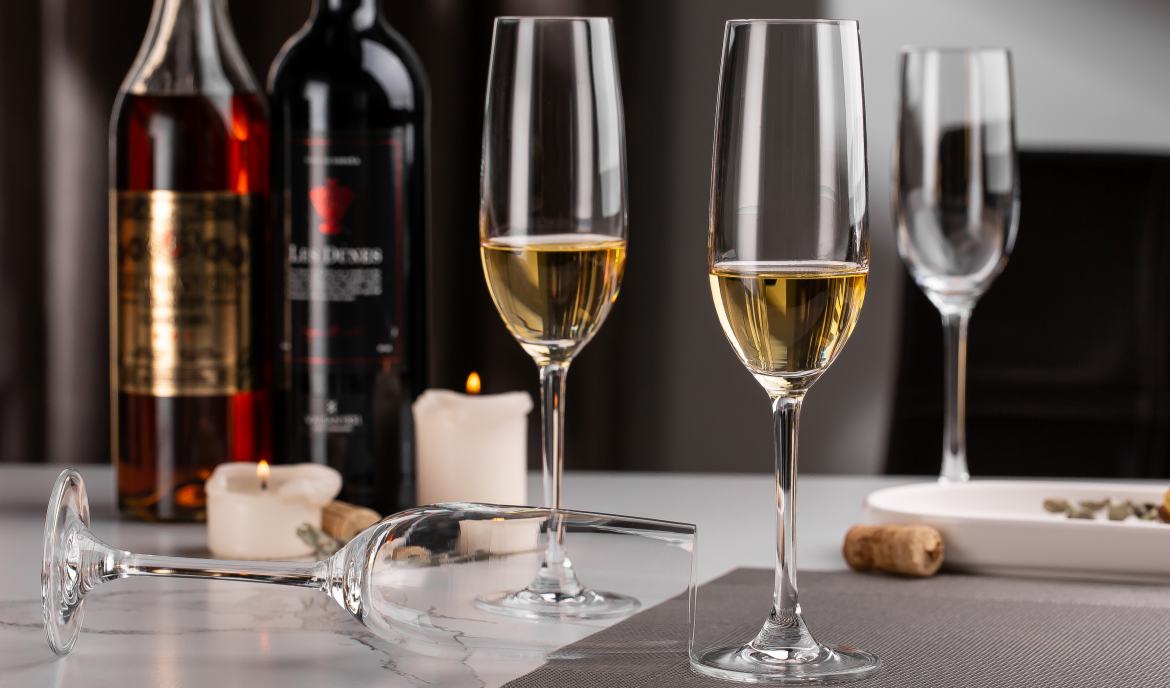
Design on the table: bowl shape, stem proportion and finish are what separate one glass from another |
||||
Why brand rankings deserve a second lookSearch for glassware brands and you will find dozens of "top ten" articles. Very few of them explain how the list was produced. Usually there is no stated method, no sample testing, no scoring criteria and no disclosure of who wrote it — which in practice means the ranking is an opinion, and often a commercial one. There is nothing wrong with an opinion, as long as it is labelled as one. The problem starts when marketing language is presented as fact. Phrases such as "three times stronger than ordinary glass", "antibacterial surface" or "withstands a 135 °C temperature difference" are measurable claims. Either a brand can point to a test report from a recognised laboratory, or the claim is decoration. That is the lens worth carrying into this category. Ask what was tested, by whom, and against which standard. A supplier who can answer those questions is usually also the one whose product will survive the journey. |
||||
Five design directions shaping glassware in 2025Across tableware, drinkware and storage, the same handful of directions keep appearing. None of them is new, but each has become more deliberate.
If you only take one thing from this list, take the last point. Design and packaging are the same decision in this category, which is why the two are usually specified together. |
||||
How established brands translate these directionsA few brands are useful reference points because their design language is consistent and public. What follows is an observation of design positioning, not a product review, and it is not an endorsement of any brand's performance claims. LuminarcA French tableware brand whose signature is colored, mix-and-match glass. Its ranges deliberately encourage combining pieces across collections, and the product line covers tableware, stemware and waterware under one visual language. It is the clearest example of color used as a system rather than a finish. LibbeyA long-established American glassware maker with a broad drinkware catalogue. Its design work concentrates on the drinking experience — how a rim meets the lip, how thin the wall can be while staying serviceable — and the range runs from minimal to retro within the same brand. LOCK&LOCKA Korean brand best known for sealed food storage. Its glass storage ranges are built around the lid and the seal rather than the vessel, and the design language stays deliberately plain so the container works in a kitchen and on a shelf. DeliA Chinese household glassware maker with a wide catalogue across drinking glasses, tableware and stemware. Its drinking glass ranges put the emphasis on handle comfort and daily handling, while the stemware side leans toward elegant, conventional profiles. The pattern across all four is consistent: the brands that hold their position do it through a clear, repeatable design language, not through a single hero product. That is the part worth copying. |
||||
What these directions mean for buyersEach of these directions has a practical consequence at the sourcing stage, and most of them surface as cost or lead time rather than as design problems. |
||||
Where a factory fits into all of thisThe brands above are consumer brands. They own the design and the retail relationship, and they sell to shoppers. A glassware factory sits one step earlier in the chain: it turns a design direction into a producible product and ships it under someone else's name. That is the position XINGHUO works from. We are not a consumer brand and we do not appear in brand rankings — we manufacture for distributors, retail chains and brand owners who bring the design, and we work across lead-free crystal, borosilicate and soda-lime glass in the same plant, from crystal wine glasses to serveware and storage ranges. In practice that covers material selection, forming, decoration such as cutting, electroplating and spray color, and the packaging that gets the finished glass to the shelf intact. If you are working from a reference product or a design sketch, the useful next step is a sample rather than a catalogue page. |
||||
Frequently asked questions
|
||||
|
||||
|
Related reading How to Choose Wine Glasses: A Beginner's Guide |



Xml Privacy Policy Blog Sitemap
Copyright © 2026 XINGHUO Glass All Rights Reserved.  Network Supported
 EN
 AR