The World of Glassware: What a Factory Can Make
Jan 09, 2024
S SmithMarketing Department, Jiangsu Xinghuo Technology Co., Ltd. · Jan 09, 2024
A glassware catalogue reads like a list of products. It is really a list of capabilities, and most sourcing mistakes start with the assumption that anything made of glass shares them. A tumbler, a storage jar and a perfume bottle can leave the same furnace and still be three different businesses.
What a glass factory actually sells
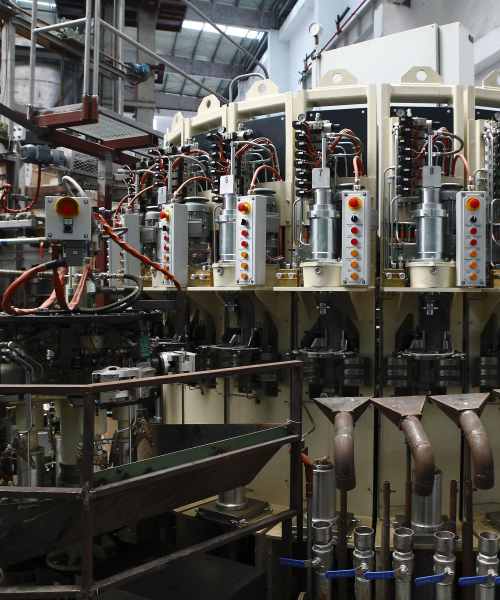
Every piece of glassware you can buy is the output of four separate stages, and a factory is only as good as its weakest one. The batch house decides the material: what goes into the furnace fixes the thermal behaviour long before anyone draws a shape. Forming decides the geometry: pressing, blowing and drawing produce very different walls, and a shape that works in one process is impossible in another. Annealing decides whether the piece survives a dishwasher or a shipping container, because it is the only step that removes the internal stress built up during forming. Decoration and finishing decide what the buyer actually sees, and it is also the stage that creates most of the compliance questions.
So the useful question is not "can you make this glass" but "which of these four stages do you run yourself". A supplier who presses and anneals in-house but buys in decoration is a different partner from one who decorates in-house and subcontracts the forming. The first controls durability, the second controls appearance, and the price you are quoted reflects whichever one they are actually good at.
At XINGHUO the forming, annealing and decoration sit under one roof, which is why a single product range can run from a pressed tumbler to a hand-cut stem without the order being split between suppliers. That is the capability this page is about, not the length of the catalogue.
Material first, product name second
Buyers usually start with a shape and then ask what it is made of. Reverse that and half the specification writes itself. Three materials cover almost everything on this site, and each one has a boundary worth knowing before you promise anything to your own customer.
Material
What it is good at
Where it stops
Soda-lime
the bulk of stemware and tumblers; better impact resistance than borosilicate, thin walls are easy, cost is lowest
thermal shock of roughly 40 to 50 °C; a cold glass into hot water can crack it
Borosilicate 3.3
expansion around 3.3 × 10⁻⁶/K, thermal shock of roughly 100 °C or more; tea ware, coffee pots, storage jars, lunch boxes
less impact resistance than soda-lime, so a thin piece breaks more readily when dropped; a poor fit for long thin stems
Lead-free crystal
low-iron batch plus cut facets; refractive index around 1.52 to 1.55, weight and sparkle that pressed glass cannot copy
cost, and it needs correct annealing; it is not a synonym for stronger
The line that gets repeated most often, and is wrong, is that borosilicate is the tougher glass. It is the more heat-tolerant glass. A borosilicate tumbler will take boiling water that would crack a soda-lime one, and it will also be the one more likely to break when it hits a tiled floor. If your customer's complaint is breakage rather than heat, the answer is soda-lime and better packing, not a more expensive batch. The full trade-off is set out in our material comparison, and the honest limits of the heat-resistant option are in the disadvantages of borosilicate.
Drinkware: where most orders start
Drinkware is the volume category and the one where small specification choices decide the return rate. Four things come up on almost every enquiry.
The rim on a tumbler. Wall thickness at the lip is the number nobody asks about and everybody feels. Below about 1.4 mm the rim chips easily in a commercial glasswasher; above about 2.0 mm the glass reads as heavy and cheap against the mouth. Between those two figures there is a range that feels right for a hotel and a different one that feels right for a retail gift box, and they are not the same mould.
The joint on a stem. Stemware fails at the point where the stem meets the bowl or the foot, never in the middle of the bowl. A machine-pressed stem is thicker and more consistent; a hand-drawn stem is thinner and lighter but varies piece to piece, which changes how you pack it. Ask which one you are being quoted, because the price difference is real and so is the breakage pattern. Our glass cup range covers both.
The handle on a beer mug. The handle is the load path, so it is a strength question rather than a design one, and it has to be tested loaded rather than by eye. Embossing adds a mould cost that scales with how deep and how detailed the pattern is, which is why a decorated mug and a plain one with the same capacity can sit far apart on price. The beer mug line is where most of this tooling already exists.
The spout on a pot. A tea pot that dribbles is a mould precision problem, not something polishing afterwards can fix. If a customer sends you a video of water running down the outside of the spout, the conversation is about tooling, not about a discount.
Two tulip glasses and a decoration sample book: in every category, the pattern is chosen before the mould is cut.
Tableware and storage: the categories buyers underestimate
These look simple and generate a disproportionate share of after-sales problems, mostly because the promises made about them are too large.
Plates and bowls. The failure is almost always the edge. A glass plate needs a properly rounded and fire-polished rim, and it needs full annealing, or it will arrive with a chip that the carton did not cause. Rim damage is the single most common reason a glass serveware order comes back.
Storage jars. Airtight means the silicone gasket and the clamp do their job, and that is all it means. It keeps moisture, insects and odours out; it does not extend a shelf life on its own, and any label that says so is making a claim the jar cannot support. The gasket is a wear part, so quote it as a spare in the same offer, because your customer will need replacements long before the jar fails. Sizing and gasket choice for a retail market are covered in choosing storage jars for a retail market.
Lunch boxes. A glass lunch box does not keep food warm. Glass conducts heat quickly, so any heat retention comes from the bag around it, not from the container. What the material does give you is microwave use without warping, provided the box is borosilicate and the lid is a plastic rated for the same temperature. Do not put an empty box in the microwave, and do not move it from freezer to microwave in one step.
Cosmetic packaging is a different business
The glass itself is not the problem. Melting, forming and annealing a perfume bottle uses the same equipment as a tumbler, and the decoration techniques overlap. What changes is everything around the glass, and this is where buyers get caught.
The regulatory question is different in kind. Food-contact glass is judged on migration: what comes out of the material into food, tested to a standard. A cosmetic bottle is judged on compatibility and containment: whether the contents attack the glass or the decoration, whether the seal holds, whether light degrades the formula. Different tests, different paperwork, and a food-contact report does not answer a cosmetics question.
The engineering question is the neck. A pump, a dropper or a screw cap has to fit, and the neck finish has to match the closure supplier's standard before anything else is worth discussing. A bottle that is beautiful and half a millimetre off will leak in transit.
To be clear about where we sit: we make the glass and we do the decoration, and pumps, droppers and caps are sourced in to match. That is normal for a glass factory, and it is better said at the quotation stage than discovered at the packing stage. How the decoration side works is set out under our processing capability.
Decoration is where the price moves
Two glasses with the same shape and the same material can differ by a factor of two on price, and decoration is usually why. Each method has a different cost structure and a different answer to the dishwasher question.
Spray coating and lacquer. The cheapest way to add colour, and the only practical way to get a gradient or a pearl effect. It is a film, so it scratches, dulls in a commercial dishwasher, and cannot sit on a food-contact surface. Cheap pigments are also where lead and cadmium appear, so ask for the migration report on the coated surface specifically.
Fired-on decal. Glass enamel fused at roughly 560 to 620 °C, which makes it hard, dishwasher-stable and safe on a rim. It carries a screen or plate cost plus a charge per colour, so it rewards volume and punishes a five-colour logo on a small order. Trends in this area are collected in custom decal trends.
Frosting. A satin surface for touch rather than for colour, done by acid or by sandblasting. Mid-priced, and it hides fingerprints, which is why barware uses it.
Vacuum metallising. The mirror gold and chrome finishes. It looks expensive and is not, but it cannot touch food and it will not survive a dishwasher, so it belongs on the outside of a decorative piece and nowhere else.
Cutting and engraving. The crystal answer. Facets are what turn a low-iron glass into something that catches light, and the cost is in the number of cuts and the skill of the wheel, not in the material.
Frequently asked questions
Can one factory really supply drinkware, storage jars and cosmetic bottles?
The glass making is the same, so yes on the melting, forming and annealing. What is not the same is the tooling, the closures and the compliance file, and those are quoted separately. Treat it as one supplier with three product families rather than one production line that makes all of it.
Is borosilicate stronger than soda-lime?
It is more heat-resistant, not stronger. Its impact resistance is lower, which is why a thin borosilicate tumbler is more likely to break when dropped. Choose it for temperature, choose soda-lime for knocks.
What drives the minimum order on a new shape?
The mould. It is a fixed cost that has to be recovered somewhere, so the MOQ is really a way of spreading it. If your shape already exists in our tooling, the minimum drops sharply and the lead time shortens by the tooling period.
Which decoration survives a commercial dishwasher?
Fired-on decal and colour that is in the glass itself. Spray coatings dull and vacuum metallising fails. If the piece is going into hotels or restaurants, this single question should be settled before the artwork is approved.
RELATED READING
Soda-lime, crystal and borosilicate compared
The limits of borosilicate glass
Choosing storage jars for a retail market
Packing that survives the container
Building a range across categories?
Send the category list and the market you are selling into. You will get back what shares an existing mould, what needs a new one, and where the compliance files differ between the lines.
Request a Factory Quote or email export@xinghuoglass.com




 Network Supported

 EN
 AR